What we do
We bring Edge AI to new and existing IoT product lines to help Product Managers and CTOs differentiate their offerings over their competitors through rapid, affordable, and low-risk co-creation projects.


Who are we
We are a team of engineers and scientists, founded in 2020 on the idea that the future of artificial intelligence should deployed directly to real-world devices rather than be limited to operating in the cloud. These devices should run at a cost and power factor which made the feasible and viable for the mass market rather than niche applications.
Since then, we have worked with government and corporate clients to bring added intelligence to edge devices, offering breakthrough capabilities, while retaining their viability. We're now working with an expanding group of clients in different sectors, bringing our full stack development capabilities to their problems and product lines.
Journeys


Existing Projects

Smarter Streetlighting
Traffic Monitoring from Streetlights
TE came to us with a problem; their existing Lumawise product line of streetlight control sensors relied on PIR motion sensors and offered limited insight.
We built our Heimdall Computer Vision algorithm to offers traffic monitoring capabilities at low power (<1W) on low cost microcontrollers, adding product functionality without compromising viability.

GPS-Denied Tracking
Positioning Navigation & Timing
HMGCC came to us with a problem; their position trackers often failed in GPS/GNSS-denied environments.
Over 12-weeks, we developed and demonstrated our "SilentTrack" concept to recreate users position over time using IMU sensor readings with the use on an Embedded Inertial Navigation System (INS) algorithm running on a device of our design.

Smarter Installation
IoT Mesh Sorting
TE came to us with a problem; their vision for their Lumawise Motion product line required manual commissioning of every sensor in a streetlight network.
We built an Embedded Machine Learning algorithm using their existing hardware and IoT stack to allow nodes to self-sort in the network and remove this commissioning burden.
Tracking Aerial Targets
Birds, Drones & More
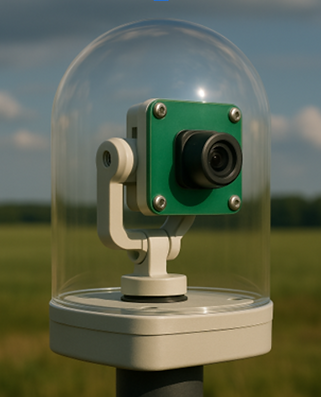
A problem we identified ourselves; detection and tracking of flying object such as drones or birds at range typically requires high-cost high-power devices today.
We are developing the technology to use Embedded Computer Vision on low cost microcontrollers to detect and track these object in smaller and simpler devices.

Smarter Security
Edge Video Analysis
HMGCC came to us with a problem; their hi-res security cameras were PIR-activated and regularly triggered for objects of non-importance.
Over 12-weeks, we developed and demonstrated our "SilentSight" concept to augment their PIR sensors with Embedded Computer Vision, reducing false detections.

Pest Detection
Real Time - Low Power - No Cloud
A problem we identified ourselves; pest detection and control requires low power and low cost devices to be viable. Existing options include sonic repellent devices using PIR sensors.
We are developing the technology to use Embedded Computer Vision on low cost microcontrollers to viably detect and track pest, enabling more targeted, specific, and ultimately effective countermeasures.
Key Technologies
Edge AI MCUs
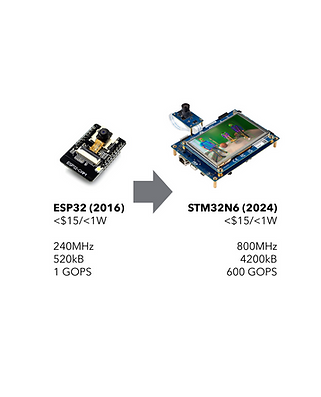
Transformative GOPS boost over time
Edge MCUs are no longer just low-power controllers, they’re now capable of running meaningful computer vision and ML workloads that once required far larger processors.
We’ve deployed real AI at the edge using sub-1W MCUs since 2020, proving that performance and efficiency are no longer mutually exclusive.

OV64A
Ultra-Resolution Imagery in IoT
High-resolution sensors aren’t just for photography anymore. With the right optimisation, they enable robust computer vision in GPS-denied or low-texture environments, unlocking use cases traditional machine vision cameras struggle with.
We've already used these sensors to detect airborne targets at 400m.
STM32N6
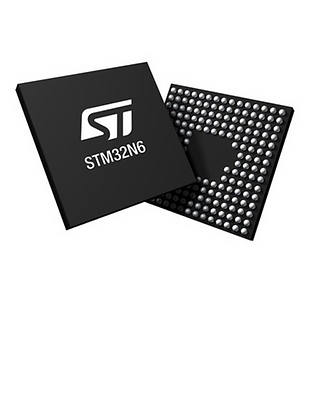
A game changer in Edge AI
The STM32N6 marks a step-change in embedded AI capability. With its on-chip NPU and smart architecture, it finally gives product teams enough horsepower to run advanced computer vision without jumping to power-hungry GPUs.
We’ve already used it to build Embedded ML systems that dramatically cut commissioning time and unlock new product value.
Ultra Wide Band
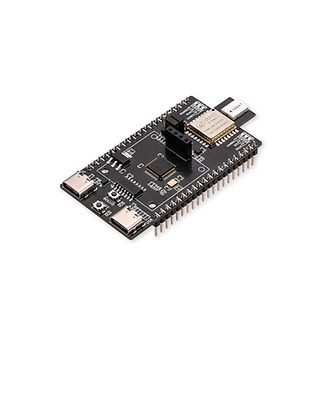
Low Latency High Accuracy Positioning
UWB provides centimetre-level positional accuracy with low latency and high reliability, ideal for robotics, asset tracking, and safety-critical systems.
We’ve deployed UWB in complex RF environments to help companies build positioning systems that work where GNSS and Bluetooth fail.
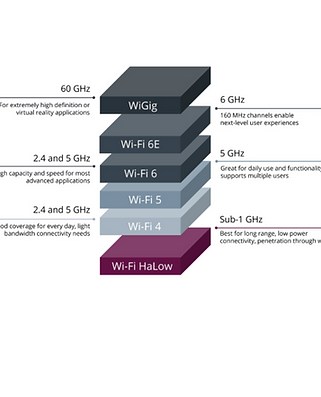
WIFI HALOW
The answer to Long Range IoT
HaLow is the first long-range, low-power Wi-Fi standard built for industrial IoT, bridging the power/bandwidth gap between Wi-Fi and Lora.
We’re using it to create self-organising mesh systems that beat traditional RF solutions on reliability, cost, range, and deployment complexity, especially in dense or cluttered environments.
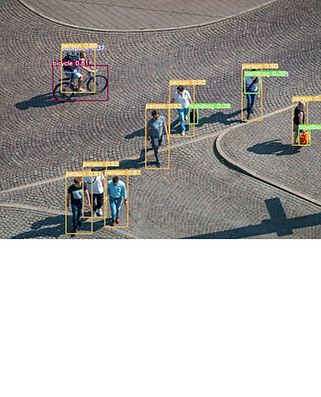
Edge Computer Vision
Same capability 0.1x the power
Most vision systems send everything to the cloud. Edge AI flips the model, processing locally, cutting costs, improving privacy, and enabling real-time decisions.
We’ve built and shipped edge-vision systems that run on sub-1W hardware and operate reliably in the real world.
Our process
Meeting the Mentor
We meet for the first time. If you think we’re a fit, we start with an audit of existing product lines and data collection pipelines. We then make a co-creation proposal with transparent costs, risks, and timelines, based on our existing technology benchmarks to de-risk and accelerate the project.
Crossing the Threshold
We develop our user story together and sign our standard PO, SOW, PRD, and Co-Development contract for the first step. We then take you from TRL3 to TRL6, culminating in a live demonstrator you can show to company management, customers, and investors. We handle the full development cycle.
Tests and Transformations
We move the project toward TRL9. We take the demonstrator and begin detailed development of the final product. We can do firmware, housing, PCB, testing, certification — or slot in alongside your existing teams to get it over the line.
The Reward
We work with your teams to help you bring the product to market. You start to see measurable bottom-line impact from embedded differentiation.
Return with the Elixir
We’re not a one-and-done vendor. Once we’ve shipped your first AI-enabled product, we work with you to find the next opportunity.